How at-home personal training works in Dubai and Abu Dhabi
At-home personal training is exactly what it sounds like: a qualified coach comes to wherever you are — your apartment living room, villa garden, building gym, rooftop terrace, or private pool deck. No commute to a gym. No waiting for equipment. No membership fee. No training in front of strangers.
PTD’s at-home model operates across Dubai — Marina, JLT, Downtown, Business Bay, DIFC, Jumeirah, Mirdif, Arabian Ranches, Damac Hills, Dubai Hills — and across Abu Dhabi. The coach brings any required equipment, or works with your building’s existing gym setup.
Each session is programmed in advance by the coach, who tracks your progress between sessions and adjusts load and volume as you improve. There is no ad-hoc approach — every session is part of a structured progressive programme.
What you need to provide: a space roughly the size of a yoga mat for floor-based work (most sessions need more room, but PTD coaches are accustomed to Dubai apartment sizes). The coach handles the rest.
For women in Dubai who prefer privacy or a female coach: PTD’s at-home model is naturally suited to this — training in your own home means full privacy, modesty, and comfort. Female coaches are available on request. See body transformation for how a full 12-week programme is structured for women in this context.
What your first free assessment looks like
PTD’s free assessment is a proper sit-down session, not a sales call. Here is exactly what happens:
1. STYKU 3D body composition scan. A quick STYKU 3D body scan captures a full 3D model of your body. It generates your body-fat percentage, lean mass, fat mass, and a set of circumference measurements — all at the same moment, without manual measuring tape or guesswork. This baseline measurement is the foundation of everything else: it shows where you are starting from and lets the coach set a realistic, measurable target.
2. Goal setting. The coach asks specific questions about your goal — not “I want to lose weight” but “What does success look like in 12 weeks? What event, deadline, or feeling are you working toward?” Specific goals allow specific programming.
3. Movement screen. A short functional movement assessment identifies movement quality, any asymmetries or restrictions, and — critically — any areas where injury history or joint pain requires modification. This is not a physiotherapy assessment, but it ensures the coach programmes around your body rather than applying a generic plan.
4. Nutrition baseline. A brief conversation about current eating patterns — not a dietary interrogation, but enough to identify the two or three highest-leverage changes that will move the needle fastest.
5. The plan. At the end of the assessment, you leave with a clear picture of your starting point (STYKU data), a realistic 12-week target, and an understanding of what the programme will look like. There is no high-pressure close. The 3-session money-back guarantee means you can start the programme and confirm it is the right fit before committing fully.
Book your free assessment — the assessment itself is always complimentary, with no obligation.
How to vet a personal trainer in Dubai: the real checklist
Dubai’s fitness industry is large and varied — qualifications, experience, and professionalism differ enormously. Here is how to evaluate any trainer, including PTD:
The non-negotiables
REPs UAE Level 3 or above. REPs UAE (Register of Exercise Professionals UAE) is the UAE’s national framework for fitness professionals. Level 3 is the minimum for personal training. Ask for their registration number and verify it at the REPs UAE directory. A trainer without REPs UAE registration is operating outside the legal framework for the profession in the UAE.
Recognised Level 3 Personal Training qualification. NASM (National Academy of Sports Medicine), ACE (American Council on Exercise), CIMSPA, REPS UK Level 3, or an equivalent internationally accredited qualification. This is the base competency standard — not a guarantee of coaching quality, but a floor.
Liability insurance. Any professional personal trainer should carry professional indemnity and public liability insurance. Ask to see proof.
Significant differentiators
Master’s degree in a relevant field. PTD coaches hold Master’s degrees in sports science, exercise physiology, strength and conditioning, or a related field. This is not common in the Dubai personal training market — it indicates deeper scientific literacy and the ability to programme for complex situations (injuries, hormonal conditions, GLP-1 medication, post-natal recovery, over-40 physiology).
Specialisation credentials. Relevant additional certifications: NASM Corrective Exercise Specialist (CES), Precision Nutrition Level 1/2, pre/post-natal coaching, or strength and conditioning certifications (CSCS). These indicate ongoing professional development beyond the base qualification.
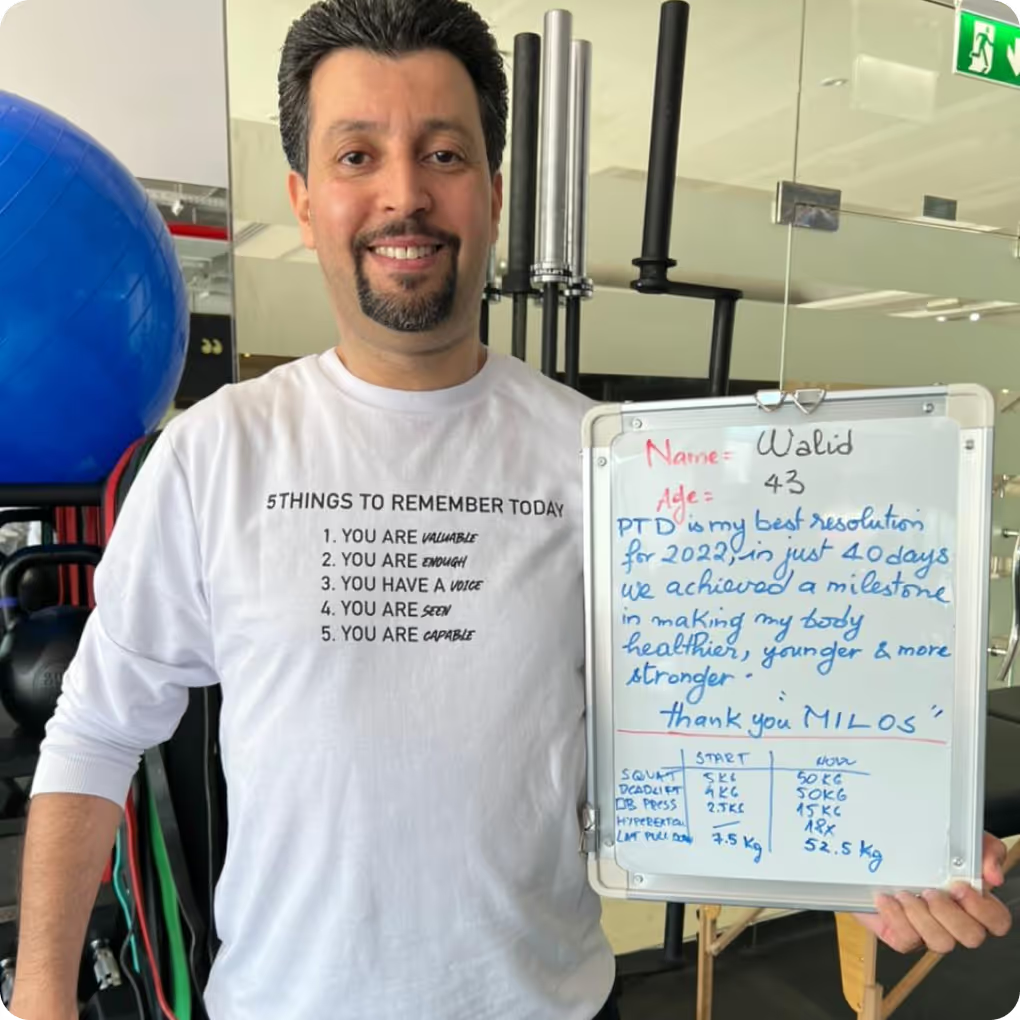
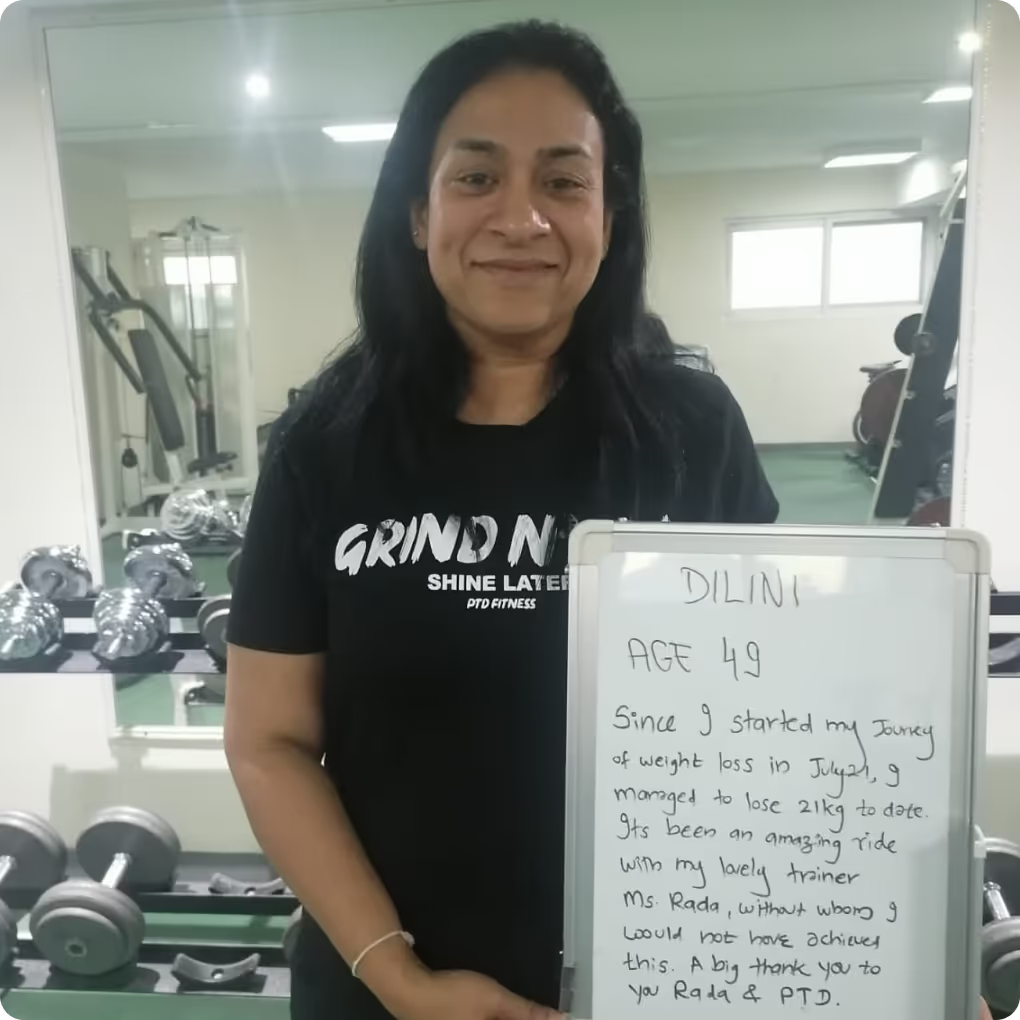
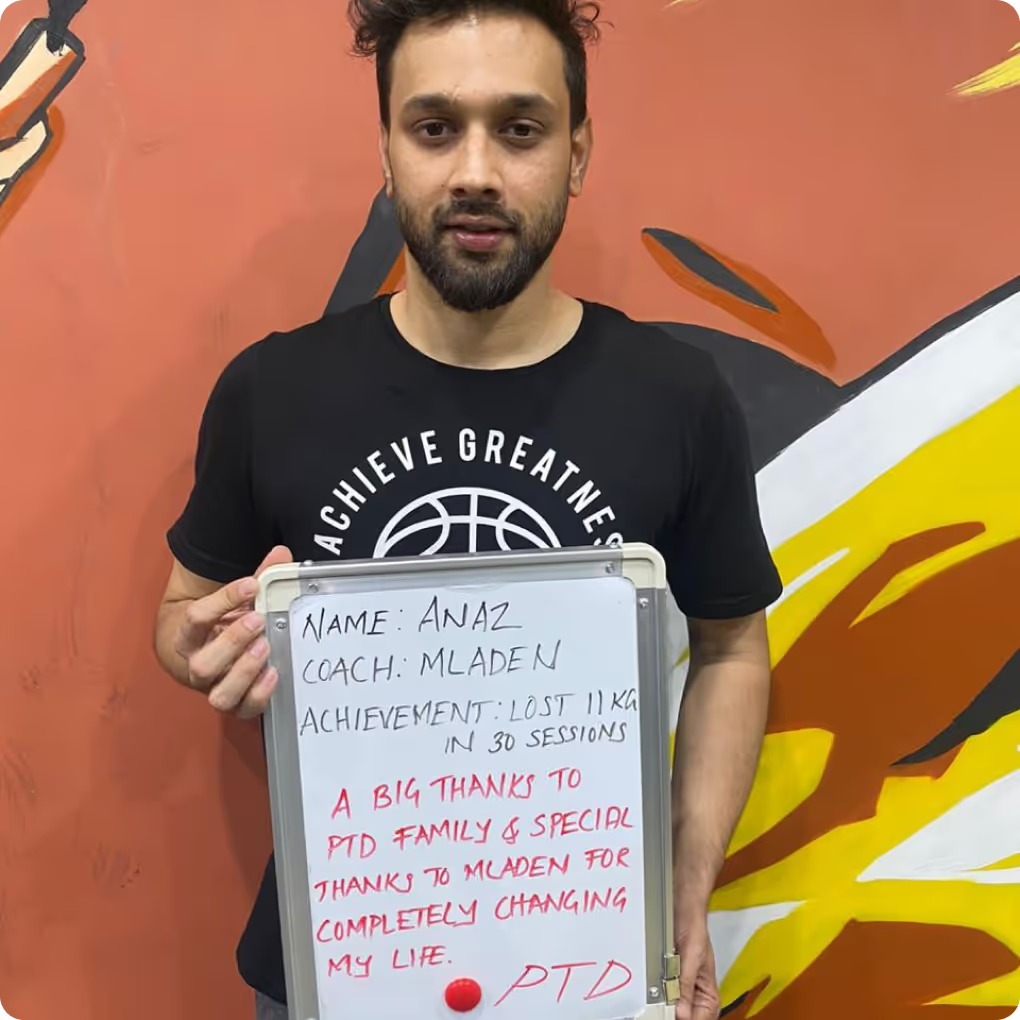
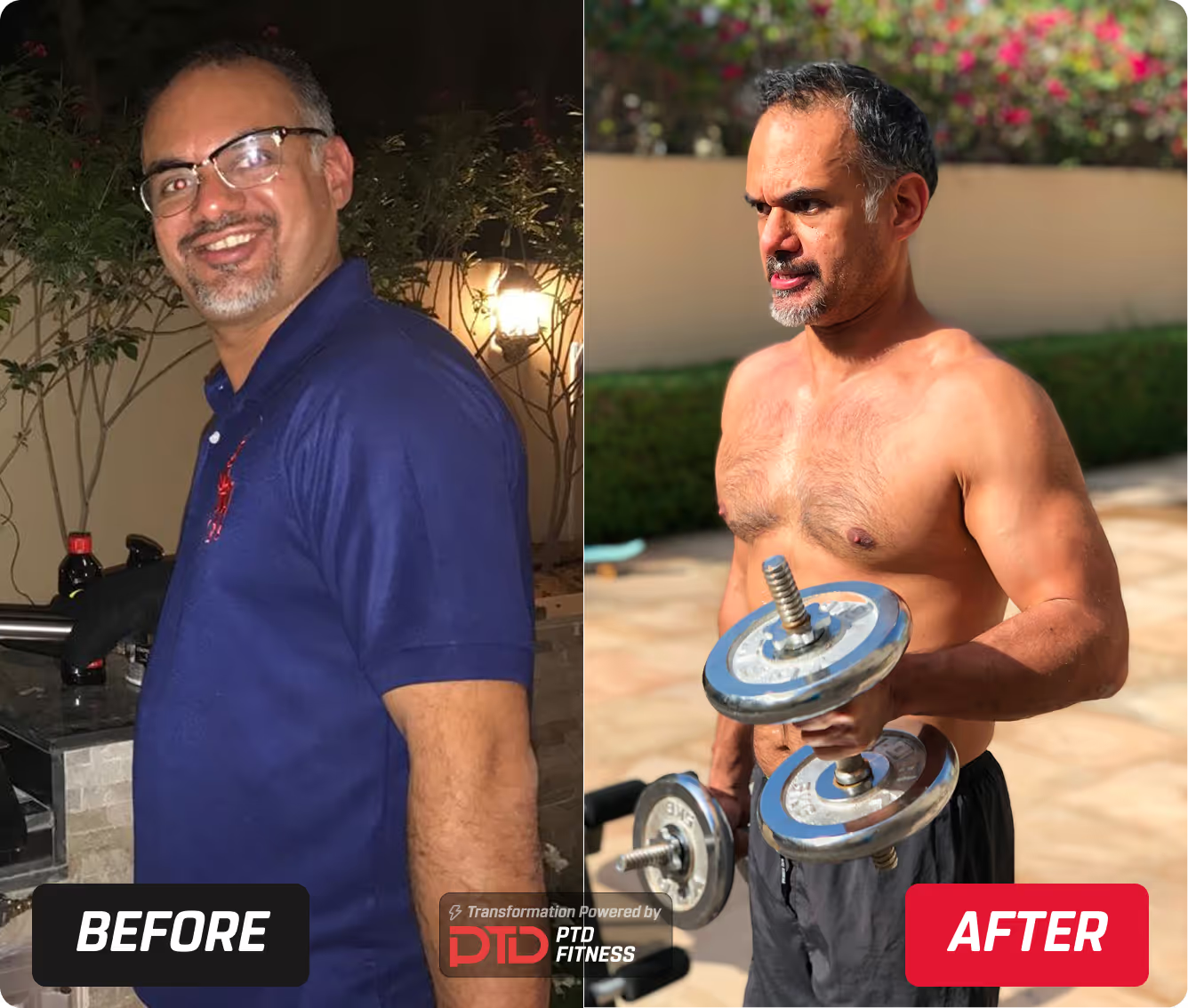
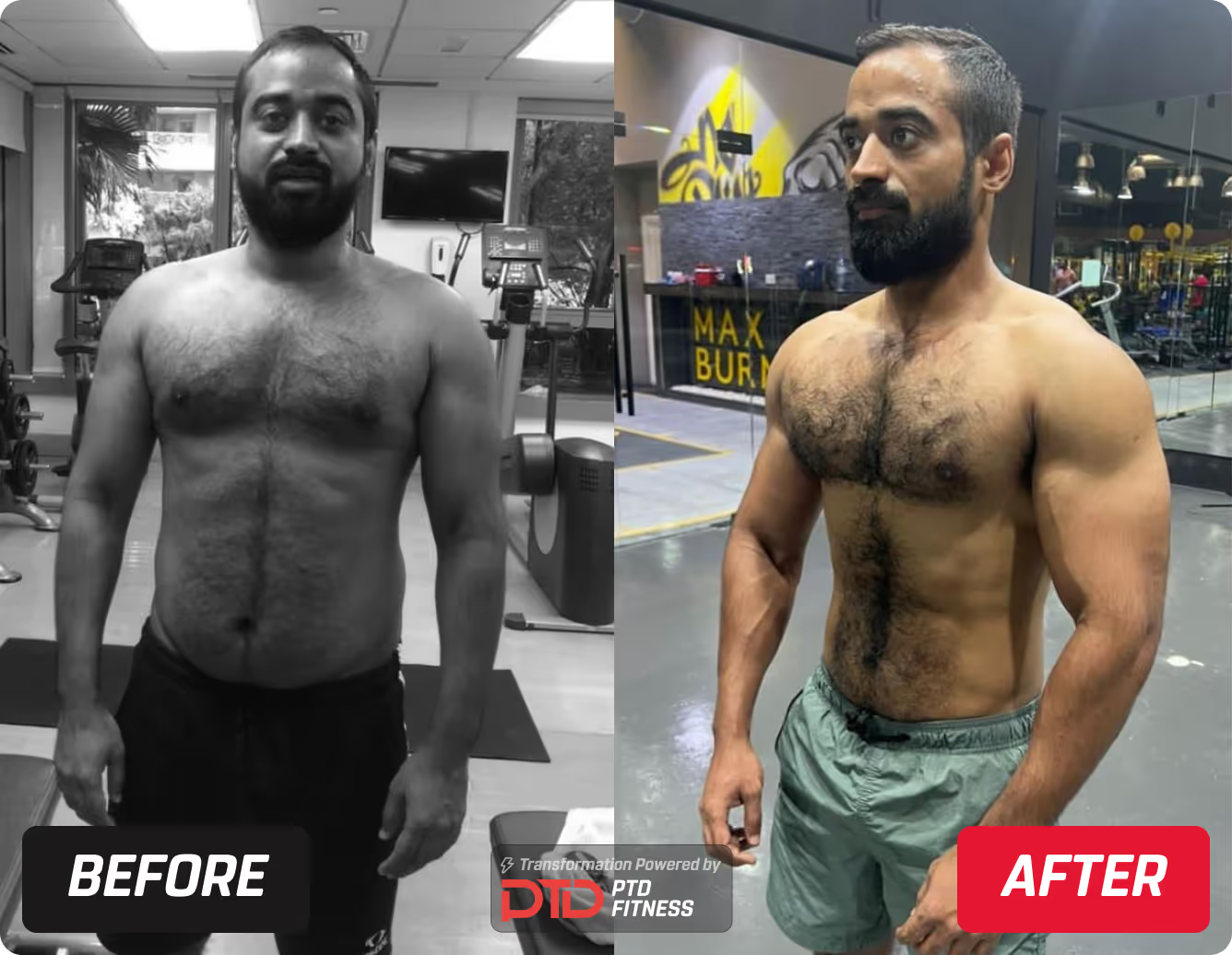
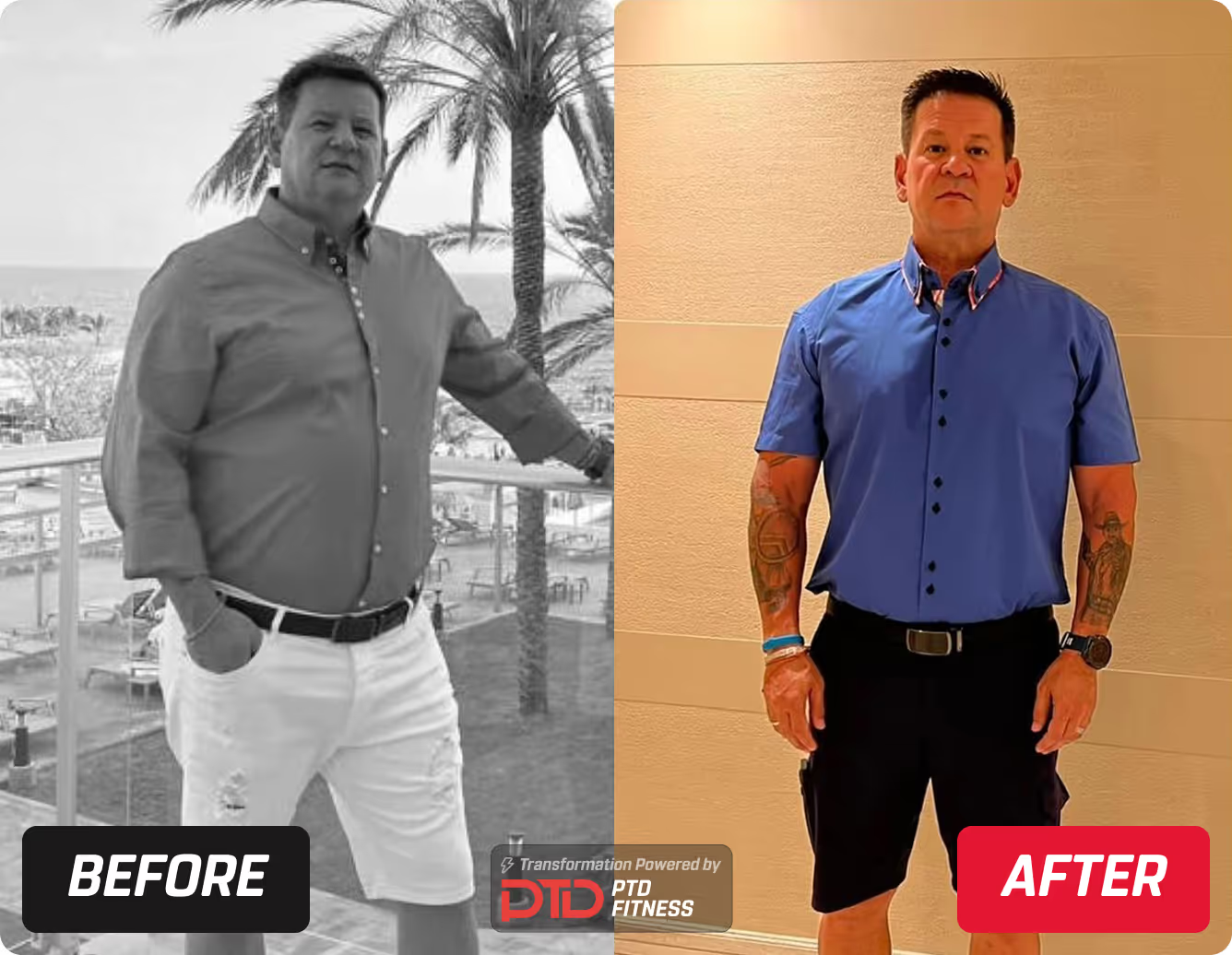
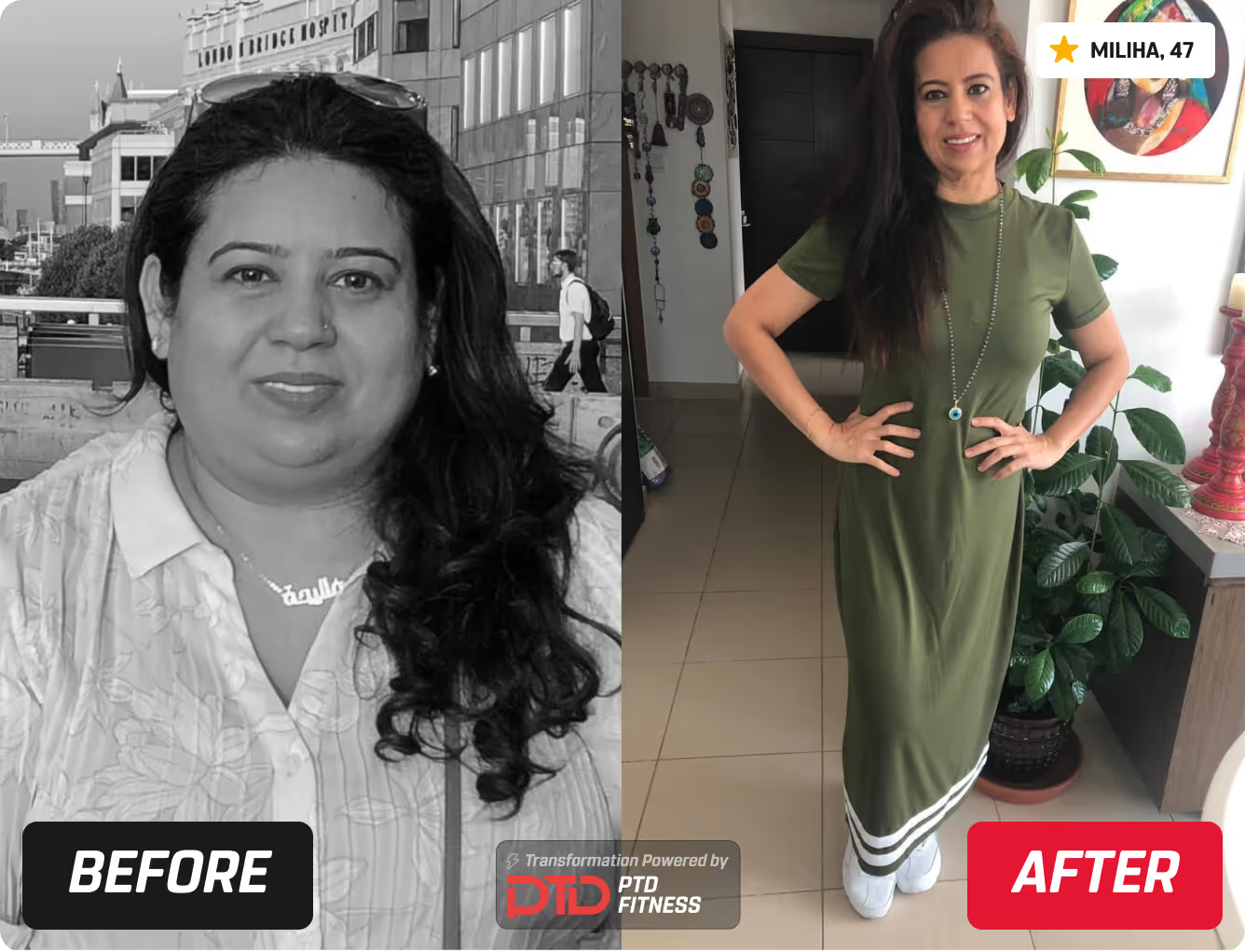
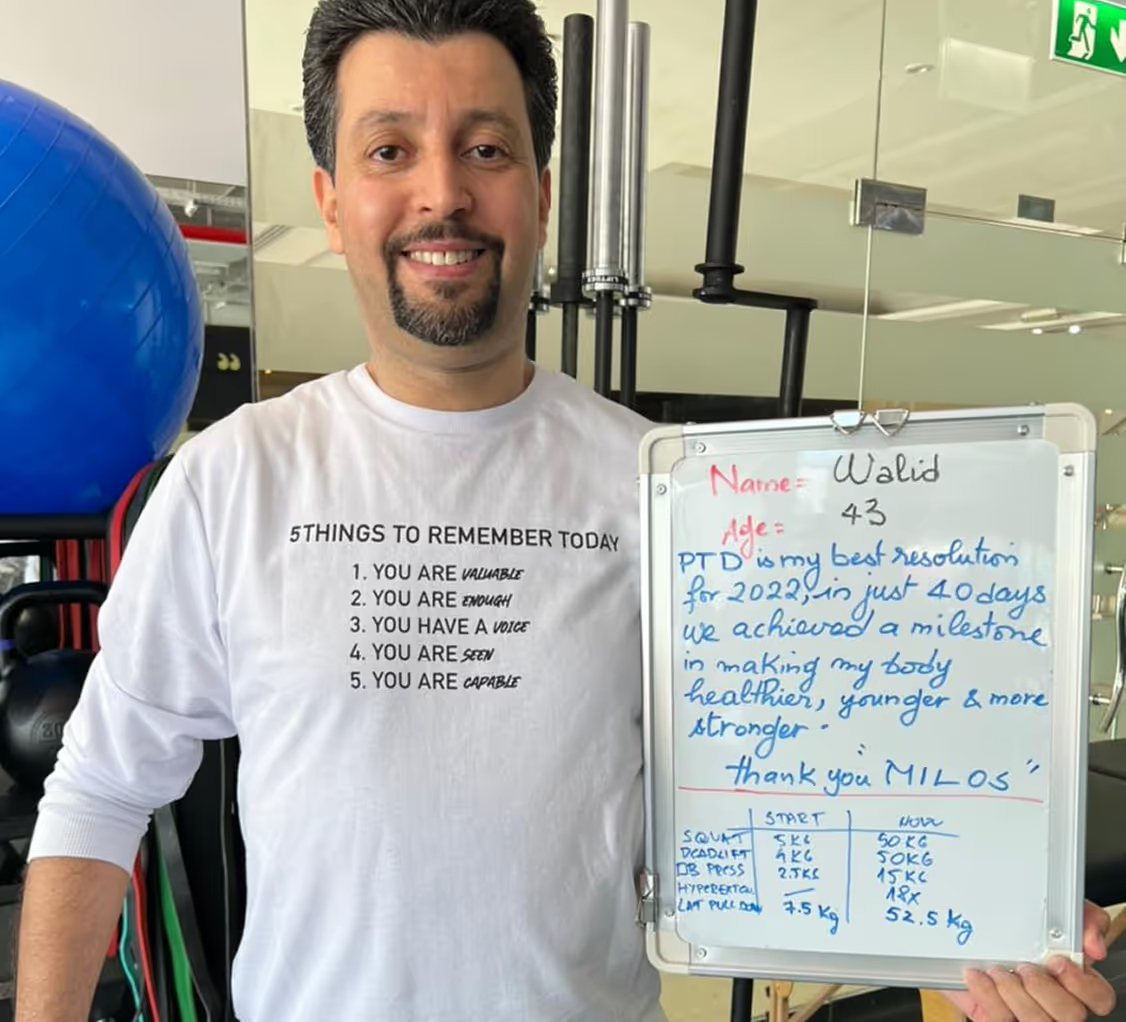
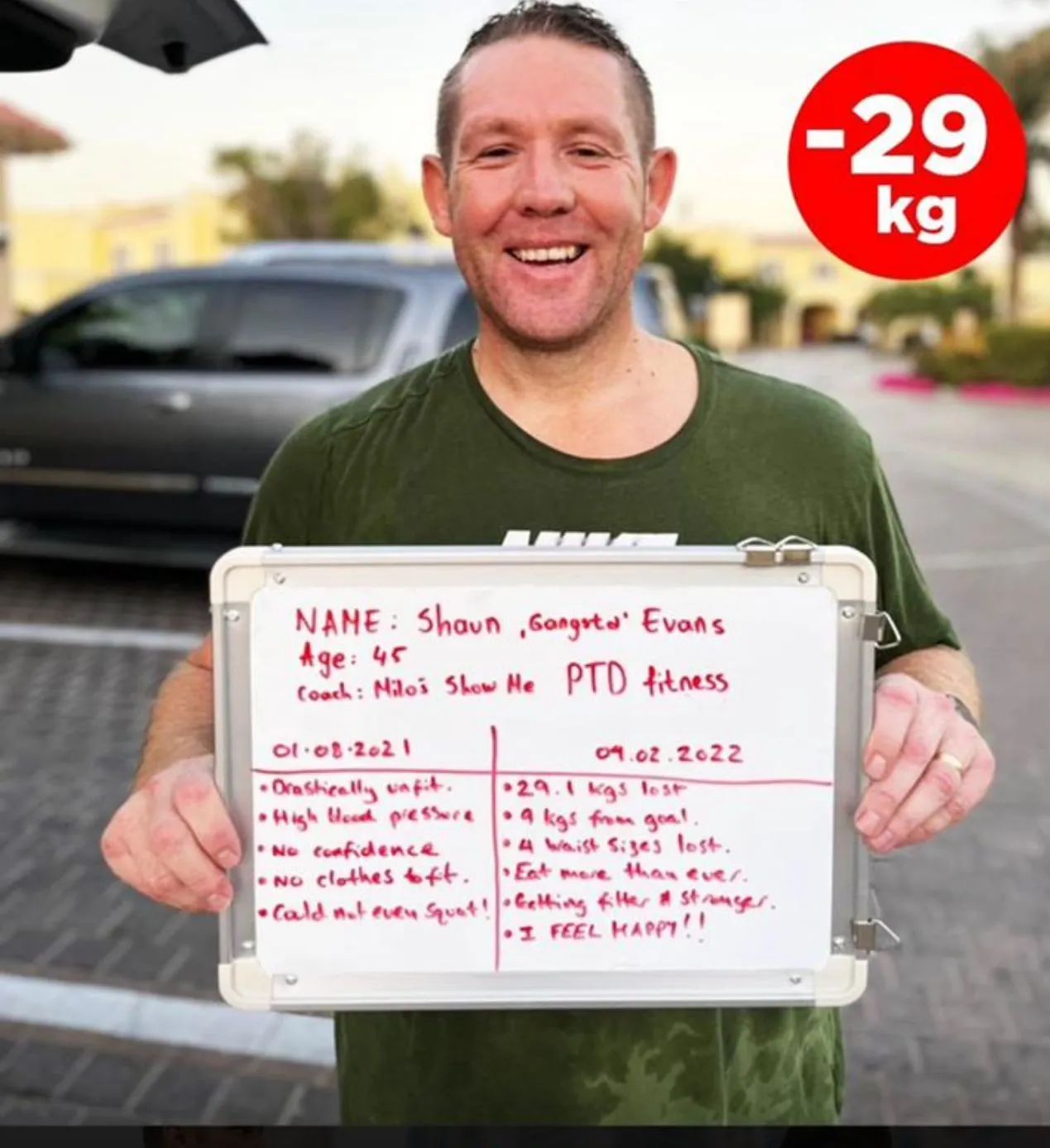
Documented results with similar clients. Ask whether the trainer has experience with clients in your specific situation — your age, starting point, goals, and any relevant health history. 11,700+ documented PTD transformations across Dubai and Abu Dhabi means PTD coaches have almost certainly worked with someone similar to you.
Red flags to walk away from
- No REPs UAE registration or inability to provide a registration number
- Promising specific weight-loss numbers without an assessment (“I’ll get you 10 kg down in 4 weeks, guaranteed” without seeing your baseline)
- No initial assessment — starting sessions without understanding your movement quality, health history, or goals
- Inability to explain the reason for exercise choices beyond “it works”
- No progress tracking between sessions
- Discouraging questions about qualifications or credentials
At-home vs. gym vs. online: what actually works in Dubai
Dubai is not London or New York. The reasons people choose different training formats here are shaped by the city’s specific context.
| Format | Best for | Dubai reality |
|---|---|---|
| At-home (trainer comes to you) | Busy schedules, privacy, women’s comfort, summer heat avoidance, parents with young children | PTD’s core model — no commute, no gym queue, no heat exposure, coach accountability |
| Gym-based PT | People who prefer a fully equipped facility, social environment | Traffic, parking, commute time, gym membership cost add up; building gyms in most Dubai residences handle most training needs |
| Online coaching | People who are already self-motivated and disciplined with a specific programme | Lower accountability; requires existing training habit; works well as a maintenance or progression tool post-transformation |
The Dubai-specific case for at-home training:
- Summer heat (June–September): outdoor training at 40°C+ is unsafe. At-home training in an air-conditioned space removes this barrier entirely.
- Time: Dubai traffic is significant. An at-home session eliminates 20–45 minutes of commute each direction.
- Privacy: particularly relevant for women in the UAE, who may prefer training without an audience, in modest clothing, or with a female coach. At-home resolves all of this.
- Building gym access: most Dubai residential buildings, particularly in Marina, JLT, Downtown, and Palm, have equipped gyms on-site. PTD coaches use these at no additional cost to you.
- Consistency: a coach coming to your door is the highest-adherence format. Accountability research consistently shows that the physical presence of a coach is the strongest driver of session completion — especially in the early weeks when habits are not yet established.
What at-home personal training costs in Dubai
Personal training pricing in Dubai ranges widely — from AED 200–600 per session depending on the trainer’s qualifications, experience level, and format.
PTD’s pricing structure, including 12-week package options and what a Master’s-credentialed at-home programme with STYKU tracking costs, is detailed on the pricing page. A free first assessment is always included before any financial commitment.
The value framework to apply: a personal trainer who produces results is not comparable to a gym membership — it is comparable to the cost of 6–12 months of not making progress. PTD’s 3-session money-back guarantee means the first three sessions carry no financial risk: if the fit is not right, you are refunded.
For how the 12-week body transformation programme works — including the training, nutrition, and accountability system — see body transformation.
To begin, book your free assessment. It is complimentary, with no obligation and no sales pressure.
Related guides
Individual results vary. PTD Fitness operates a mobile personal training service across Dubai and Abu Dhabi. All coaches hold REPs UAE registration and recognised personal training qualifications. For weight loss goals: see the weight loss guide. For what to expect in terms of results over 12 weeks: see body transformation.