The real method: deficit + protein + resistance + sleep
Losing weight comes down to four levers — and all four have to be in place.
Calorie deficit. You need to consume less energy than you expend. A daily deficit of 500–750 kcal produces roughly 0.5–1 kg of fat loss per week, which aligns with the safe rate recommended by the Mayo Clinic and NIH guidelines. Larger deficits tend to accelerate muscle loss and metabolic adaptation — not a shortcut, a trap.
High protein. Protein at 1.6–2.0 g per kg of bodyweight does two things in a deficit: it preserves the muscle you already have and it significantly increases satiety. The ISSN protein position stand (PMC5477153) supports this target for people in an active training programme. In a deficit, lean toward the upper end (1.8–2.0 g/kg) to protect muscle tissue.
Resistance training. Cardio burns calories during the session. Resistance training builds metabolically active muscle tissue that burns more calories at rest — and it’s the primary driver of the body composition change that makes a transformation visible. You don’t need a gym; progressive at-home training with your own bodyweight, dumbbells, or resistance bands produces real results.
Sleep. This is the lever most people ignore. A landmark study published in the Annals of Internal Medicine (Nedeltcheva et al., 2010) put dieters on the same calorie deficit but different sleep durations. The group sleeping 5.5 hours lost 60% more muscle and 55% less fat than the group sleeping 8.5 hours. Same diet. Sleep is not optional — it’s a fat-loss variable.
How fast is safe? What “10–15 kg in 12 weeks” actually means
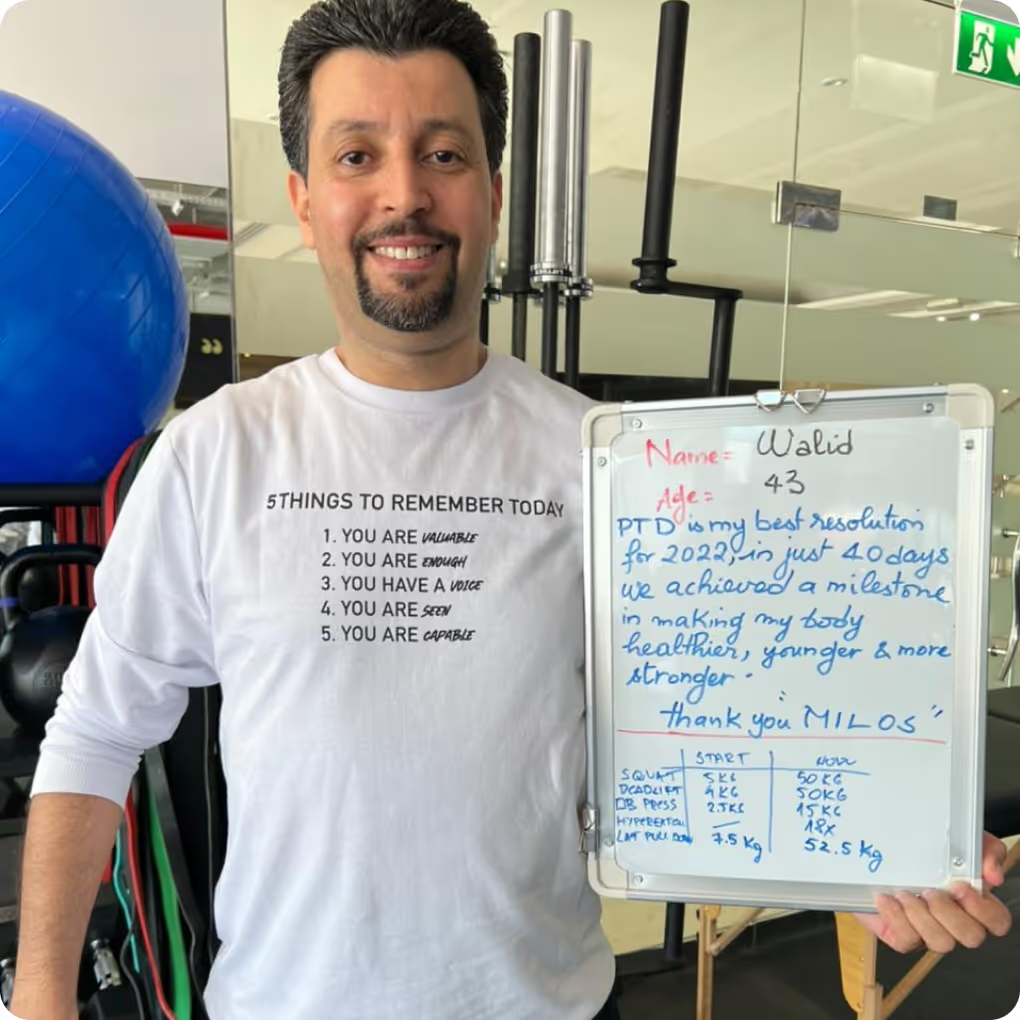
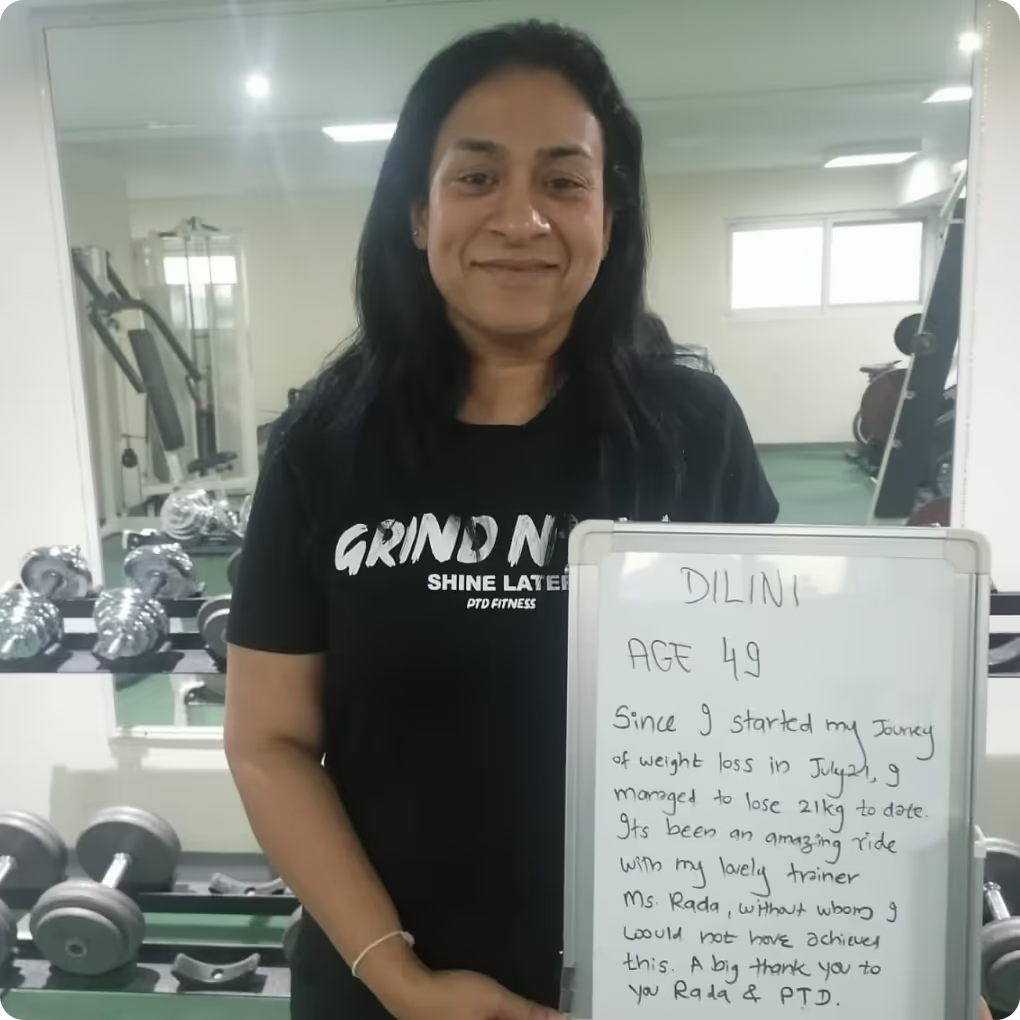
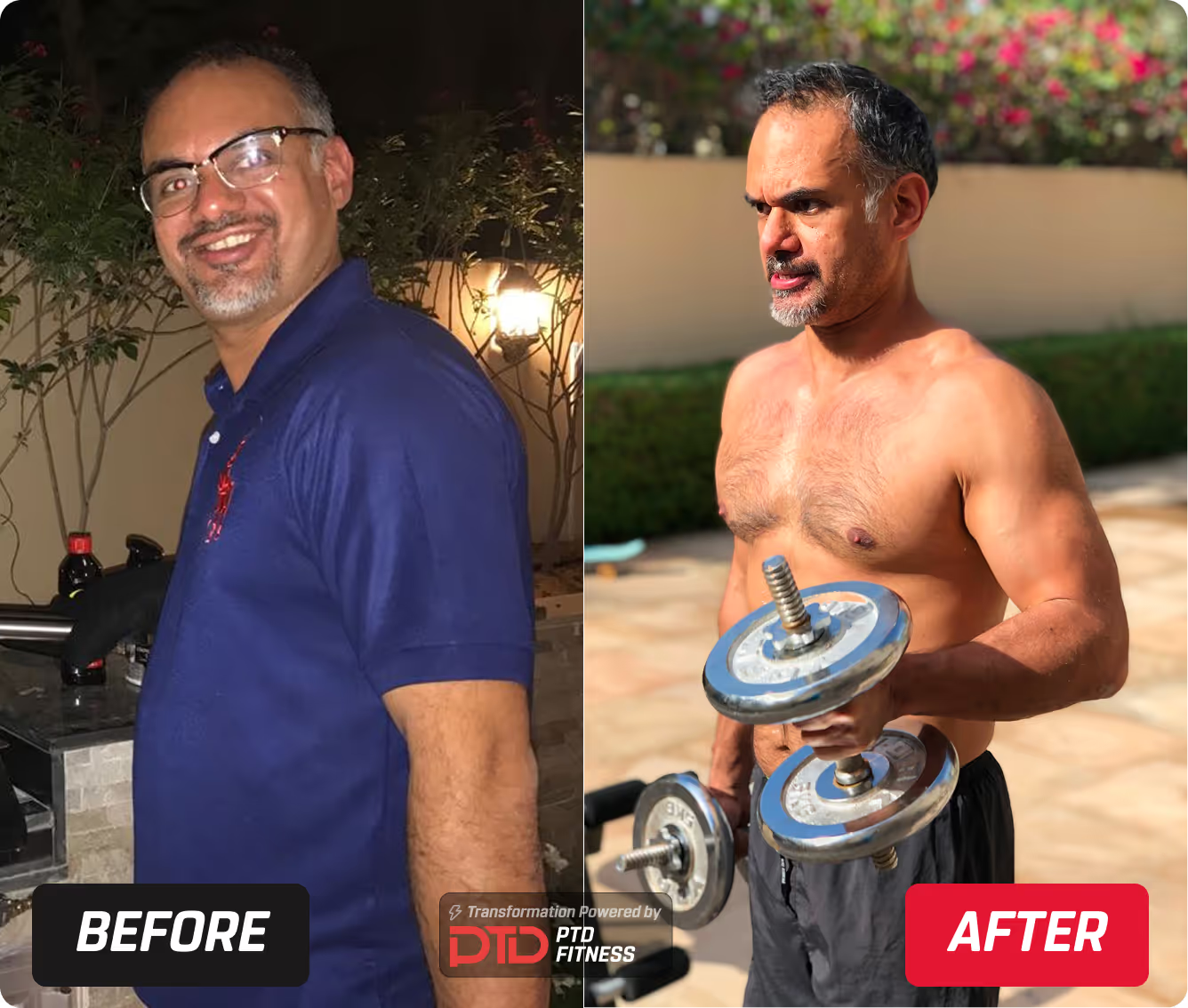
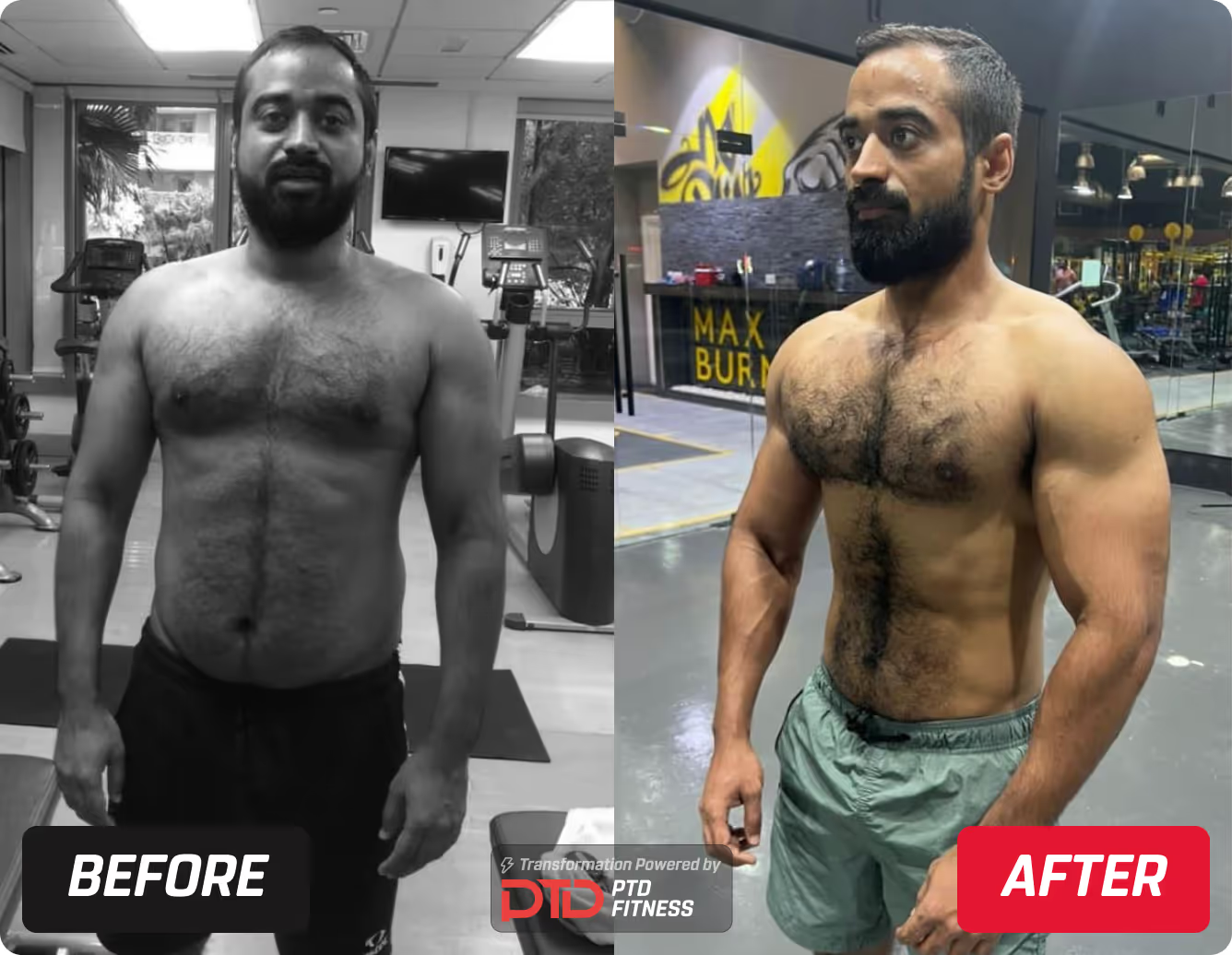
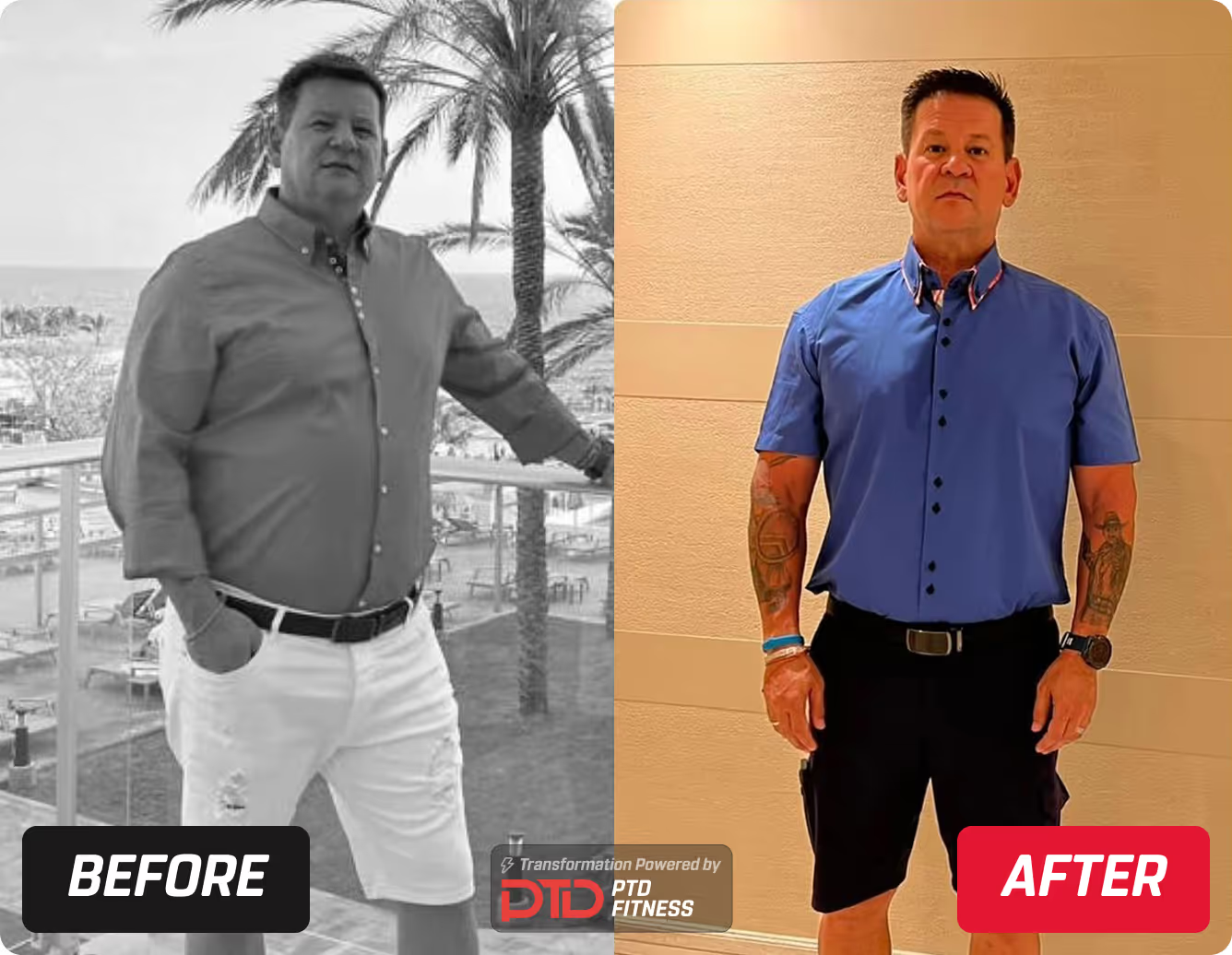
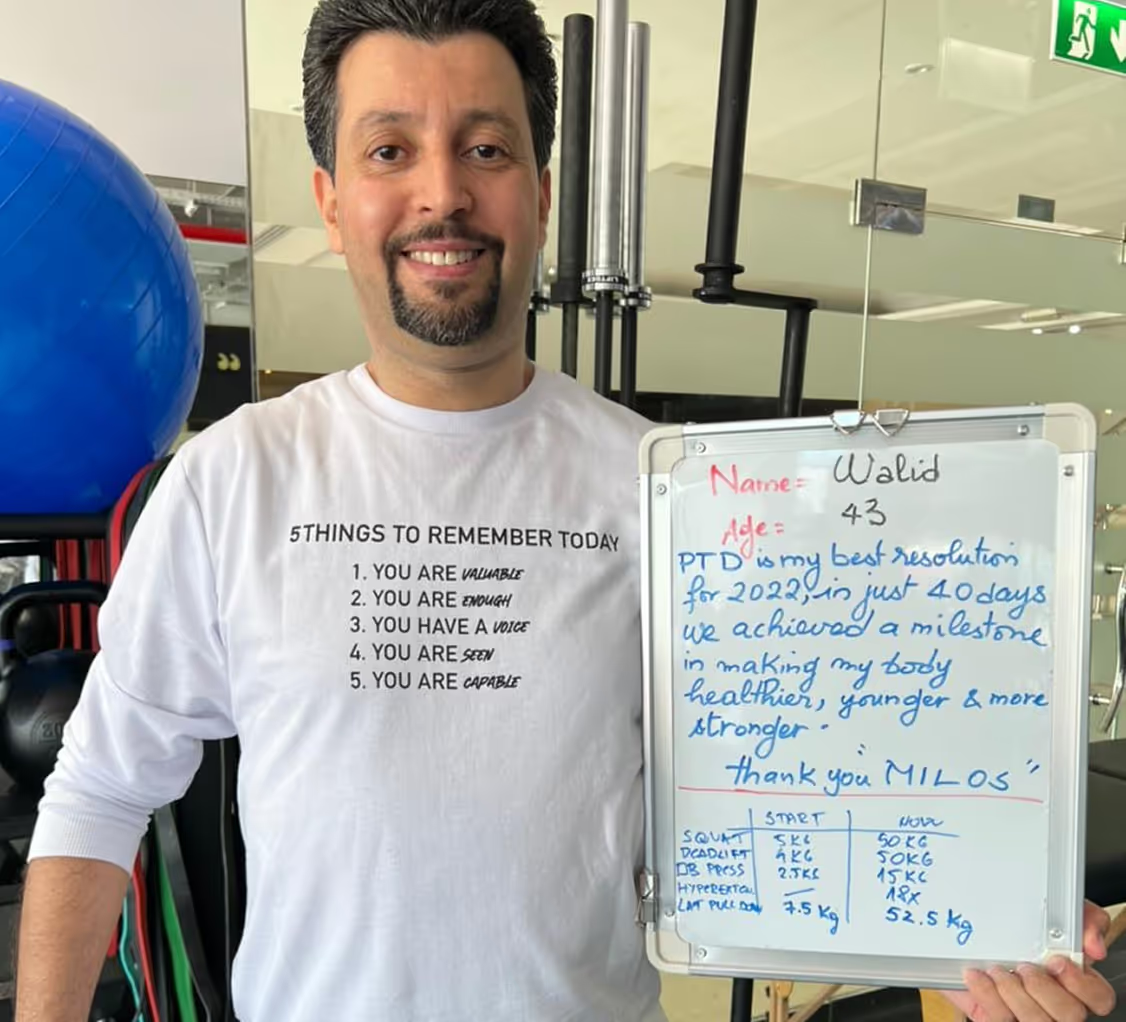
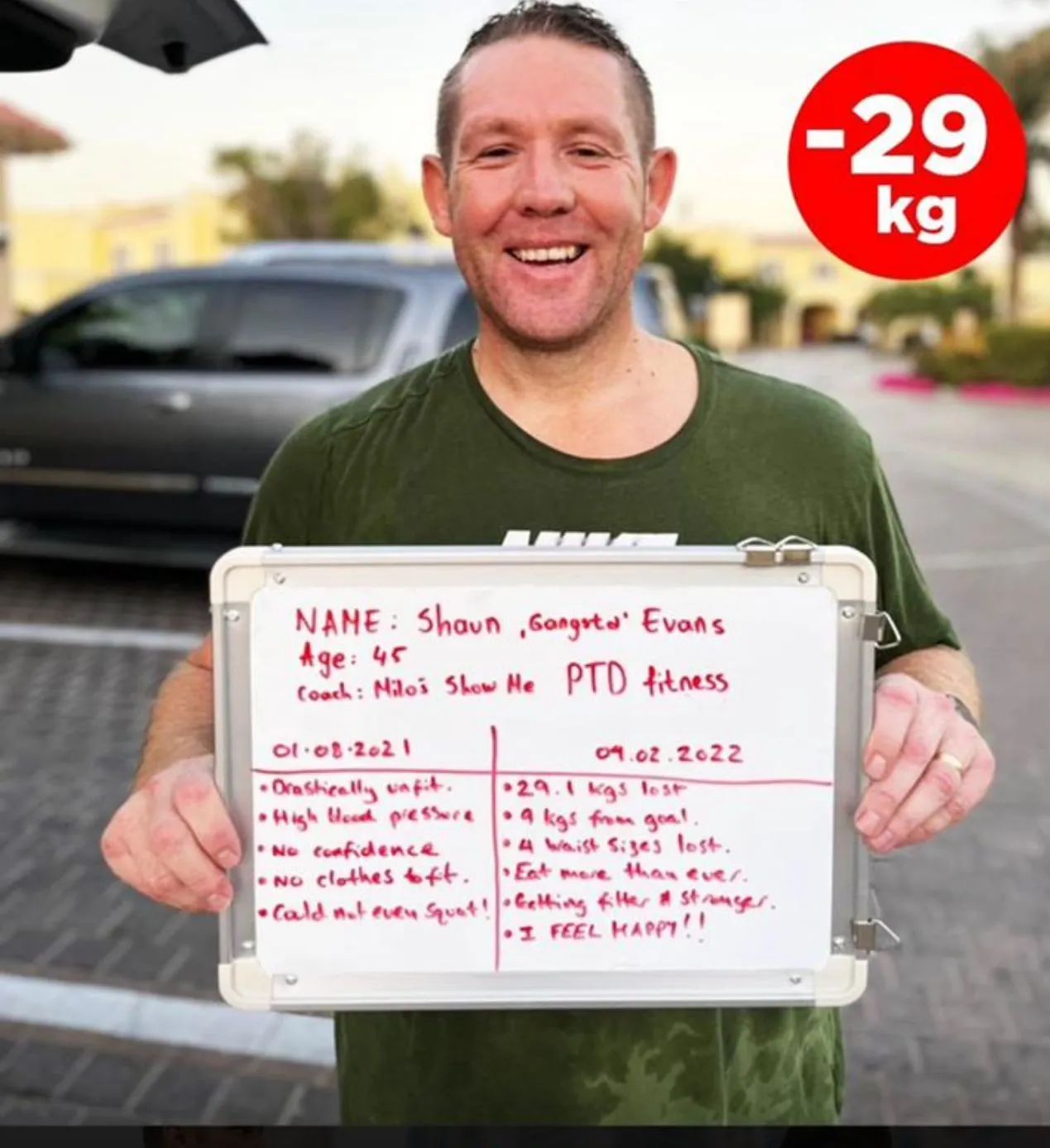
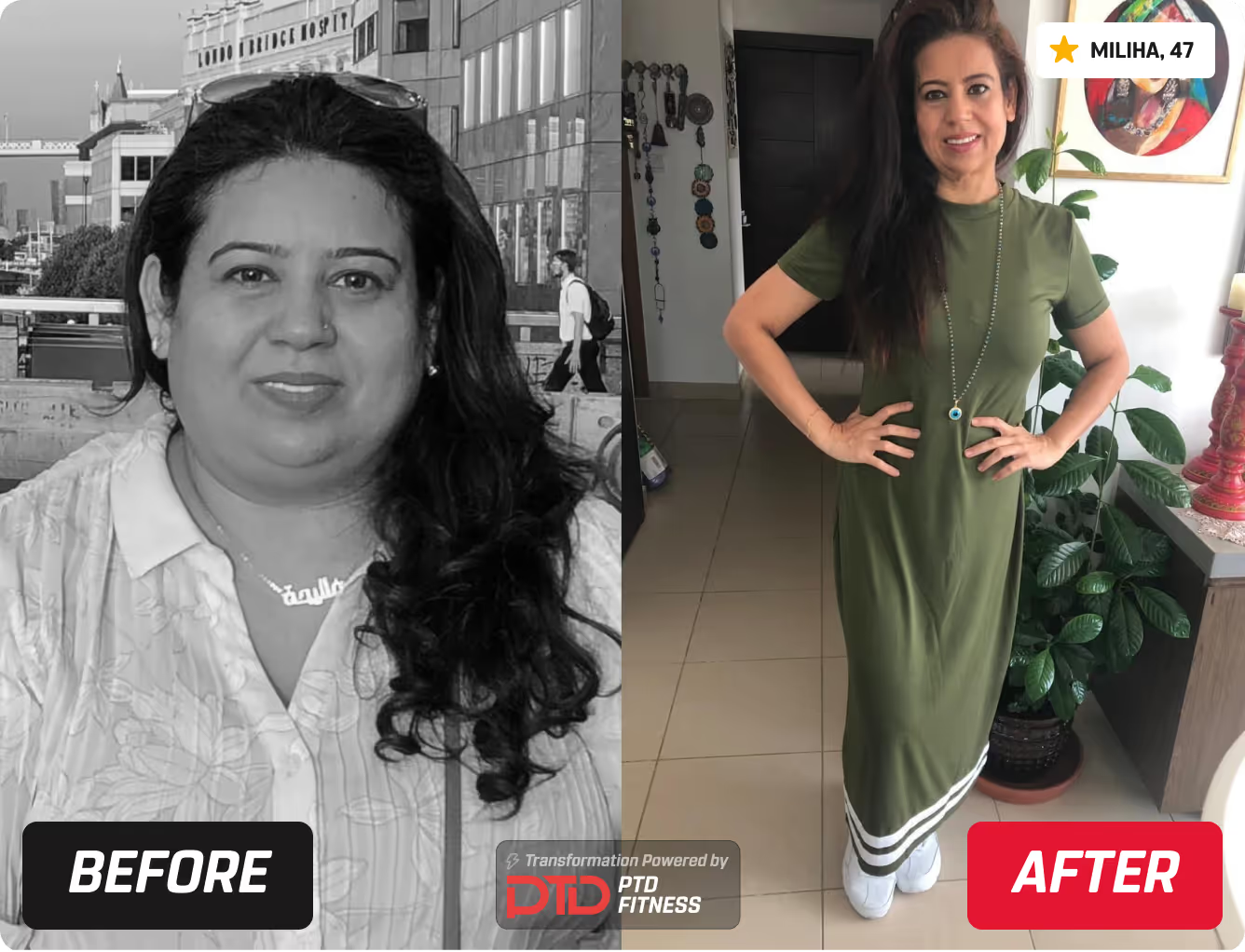
PTD’s 12-week transformation programme — behind 11,700+ documented results — delivers 10–15 kg of scale-weight change for many clients. Here’s the honest breakdown of what that number contains:
Weeks 1–2: The fastest drop. Water, glycogen, and inflammation reduction often produce 2–4 kg of scale-weight change before meaningful fat is lost. This is real and valuable (it’s inflammatory weight) but it is not all fat.
Weeks 3–10: True fat loss. With a 500–750 kcal deficit plus resistance training and high protein, fat loss averages 0.5–1 kg per week. Over eight weeks that’s 4–8 kg of actual fat — visible, measured by STYKU 3D body composition scanning, not just a scale.
Weeks 11–12: Consolidation. The body adapts to the new lower weight; the coach recalibrates the deficit and adjusts training load.
The higher end of PTD’s promise (15 kg in 12 weeks) applies to clients starting at higher body-fat percentages, where both the water-weight drop and the safe fat-loss rate are higher. At a lower starting weight, 8–10 kg is more realistic — and it’s mostly fat, not water.
Individual results vary.
Why you’re stuck in a “deficit” that isn’t working
This is the most common coaching conversation. You’re eating less, the scale isn’t moving, and you’re frustrated. Here’s the diagnostic order used at PTD:
-
Check tracking accuracy. Research consistently shows people dramatically underestimate how much they eat. Weigh food (don’t estimate), log cooking oils, and account for tastings and drinks.
-
Read the 2-week trend, not today’s number. Daily scale weight fluctuates by 1–3 kg due to water, sodium, hormones, and digestion. A true fat-loss signal only appears across 10–14 days of data.
-
Check sleep and stress. Cortisol from poor sleep or chronic stress causes water retention that masks fat loss on the scale — and as the Annals of Internal Medicine study shows, poor sleep directly impairs fat loss at the cellular level.
-
Recalculate your TDEE. As you lose weight, your body burns fewer calories. The 500 kcal deficit you set at 90 kg may have disappeared now that you weigh 82 kg. StatPearls’ review of weight-loss plateau management (NBK576400) identifies metabolic adaptation as the primary physiological driver of stalls — not willpower failure.
-
Measure composition, not just scale weight. If the scale is flat but your clothes fit better and your measurements are down, you are losing fat and building muscle (body recomposition). The scale is the worst tool for tracking this. PTD uses STYKU 3D body scanning to separate fat mass from lean mass — this matters.
Why Dubai makes it harder — and what changes when coaching comes to you
Dubai creates four specific obstacles most weight-loss advice ignores:
Heat. June–September outdoor temperatures of 40°C+ make traditional “go for a run” advice actively dangerous. Most people stop exercising entirely. PTD’s model — a Master’s-credentialed coach who comes to your home or building gym — means training never stops because of weather.
Indoor, sedentary lifestyle. The combination of desk work and air-conditioned everything means most Dubai residents have very low NEAT (Non-Exercise Activity Thermogenesis) — the calories burned through daily movement outside structured exercise. This makes it easy to overestimate your total daily calorie burn and undersize your deficit.
Social eating culture. Dubai brunches, business dinners, and Ramadan iftars are built around large quantities of high-calorie food. A good coach doesn’t tell you to skip these — they help you budget calories around them without derailing your progress. See nutrition for the eating-out playbook.
Accountability. Research on supervised versus self-directed training shows coached clients lose significantly more fat — approximately 1.61 kg more in controlled studies (ScienceDirect 2024). A coach who shows up at your door removes the single biggest failure point: not showing up.
Fat loss vs. scale weight: what you should actually measure
The scale shows total bodyweight — fat mass, muscle mass, water, food in transit, and bone. During a well-designed programme, it’s common for scale weight to stall or even rise slightly while fat is being lost, because resistance training stimulates muscle growth or water retention around adapting muscle tissue.
What matters is body composition — the ratio of fat to lean mass. PTD measures this at the free assessment using STYKU 3D body scanning, giving you a baseline and tracking your actual fat-mass change across the 12 weeks. This is the metric that tells you whether the programme is working, independent of what the scale says on a given morning.
For a deeper look at how fat loss and muscle building interact, see the build muscle guide.
The PTD method: what makes it work
PTD’s 12-week body transformation combines three pillars:
- Training: Progressive resistance programming, delivered at home by a Master’s-credentialed coach. No gym required, no commute.
- Nutrition: A personalised calorie and protein target set at the free assessment, adjusted by your 2-week trend data.
- Accountability: A coach at your door, in your building gym, or poolside — whatever your setup. The research is clear that this is the variable that separates consistent results from inconsistent ones.
The body transformation programme is where this comes together as a 12-week, coached system, backed by a 3-session money-back guarantee and a free assessment to map exactly what’s possible for your starting point.
Related guides
- How to lose 10kg in 12 weeks — the realistic coached breakdown
- Why am I not losing weight in a calorie deficit? A coach’s troubleshooting flow
- How to lose belly fat — what the research actually says
Individual results vary. This guide is for educational purposes. If you have a medical condition affecting your weight or metabolism, coordinate with your doctor before changing your diet or exercise programme.