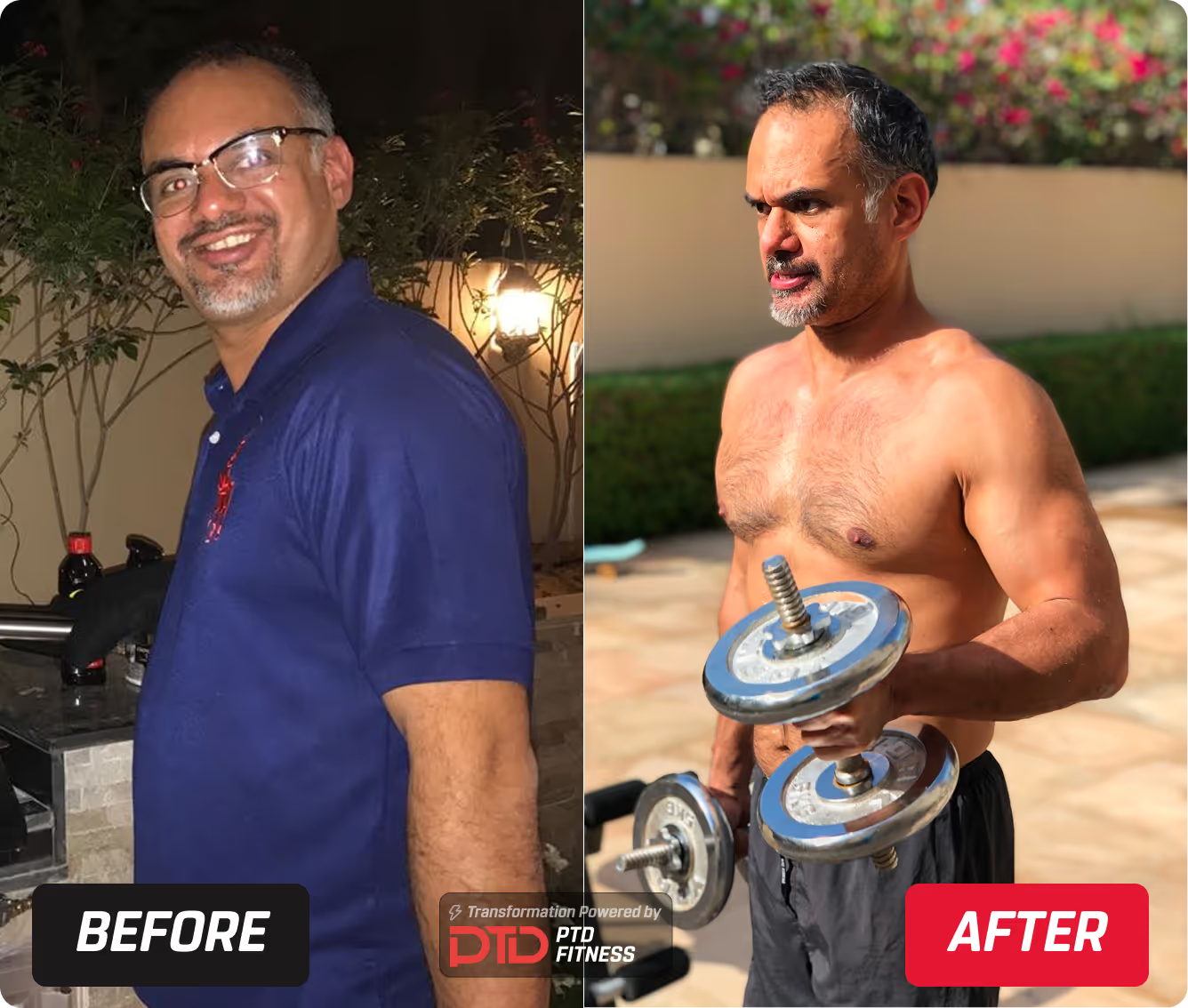
How much protein you actually need to build muscle
The answer is more precise than most guides admit. The ISSN protein position stand (PMC5477153) places the optimal range at 1.6–2.0 g of protein per kg of bodyweight per day for people in structured resistance training. A further dose-response meta-analysis (PMC9441410) confirms that gains plateau above approximately 2.2 g/kg — so eating vastly more protein does not produce proportionally more muscle.
Which end of the range applies to you depends on your goal and context:
- In a calorie surplus (building): 1.6–1.8 g/kg is sufficient. Extra calories provide the anabolic environment your muscles need.
- In a calorie deficit (recomposing or cutting): push to 1.8–2.0 g/kg. Protein needs rise in a deficit because your body will otherwise catabolise muscle for fuel.
- On a GLP-1 medication (Mounjaro/Ozempic): 1.8–2.0 g/kg becomes even more critical — see the GLP-1 insights guide for why.
Practical targets for common bodyweights:
| Bodyweight | 1.6 g/kg | 2.0 g/kg |
|---|---|---|
| 70 kg | 112 g | 140 g |
| 85 kg | 136 g | 170 g |
| 100 kg | 160 g | 200 g |
Spread your total across 3–4 meals of 30–50 g each. Per-meal distribution matters: a single large protein hit does not produce the same muscle-protein synthesis response as evenly distributed intake.
Halal high-protein staples that hit these targets in Dubai: chicken breast, lean beef, eggs, Greek yoghurt, cottage cheese, labneh, lentils paired with rice, and canned tuna. For a full Dubai-specific nutrition breakdown, see the nutrition guide.
Progressive overload: the only training variable that builds muscle over time
Protein provides the raw material. Progressive overload — systematically increasing the demand placed on your muscles over time — is the signal that tells your body to build more. Without it, you maintain; with it, you grow.
Progressive overload does not always mean adding weight to the bar. For at-home training (which is PTD’s model — coaches come to you across Dubai and Abu Dhabi), progression works through:
- More reps at the same weight/resistance (e.g., 3×8 → 3×12 over 2–3 weeks)
- More sets at the same reps (3×10 → 4×10)
- Less rest time between sets (60s → 45s with the same load)
- Harder variation of the same pattern (push-up → decline push-up → ring push-up)
- Added load when bodyweight or band resistance allows it
A weekly volume of 10–20 sets per muscle group is the evidence-based range for hypertrophy. Beginners respond well at the lower end; intermediate trainees need higher volume to continue progressing. PTD coaches structure this into a 3–4 day weekly plan that fits around Dubai work schedules and the summer heat — you train in your home or building gym, so the 40°C summer outdoors is irrelevant.
Body recomposition: who it works for and who should just cut or bulk
Body recomposition — losing fat and building muscle simultaneously — sounds too good to be true, but the research is clear on who achieves it:
It works best for:
- Beginners (0–12 months of consistent training): muscle-protein synthesis is elevated far above baseline; the body responds to almost any resistance stimulus.
- Returning trainees (“muscle memory”): previously trained muscle fibres regrow faster than new growth — a return trainee after 3–6 months off can recomp effectively.
- Higher body-fat individuals (25%+ BF): the body is more willing to mobilise fat stores as fuel while muscle is built, so a slight deficit is well-tolerated.
- GLP-1 medication users (Mounjaro/Ozempic): the enforced calorie deficit combined with a high-protein + resistance protocol is ideal recomposition territory — see the GLP-1 insights guide.
It is harder for:
- Advanced, lean trainees (under 15% BF in men, under 22% in women) who have been training for years. At that point a deliberate bulk or cut cycle typically produces faster progress.
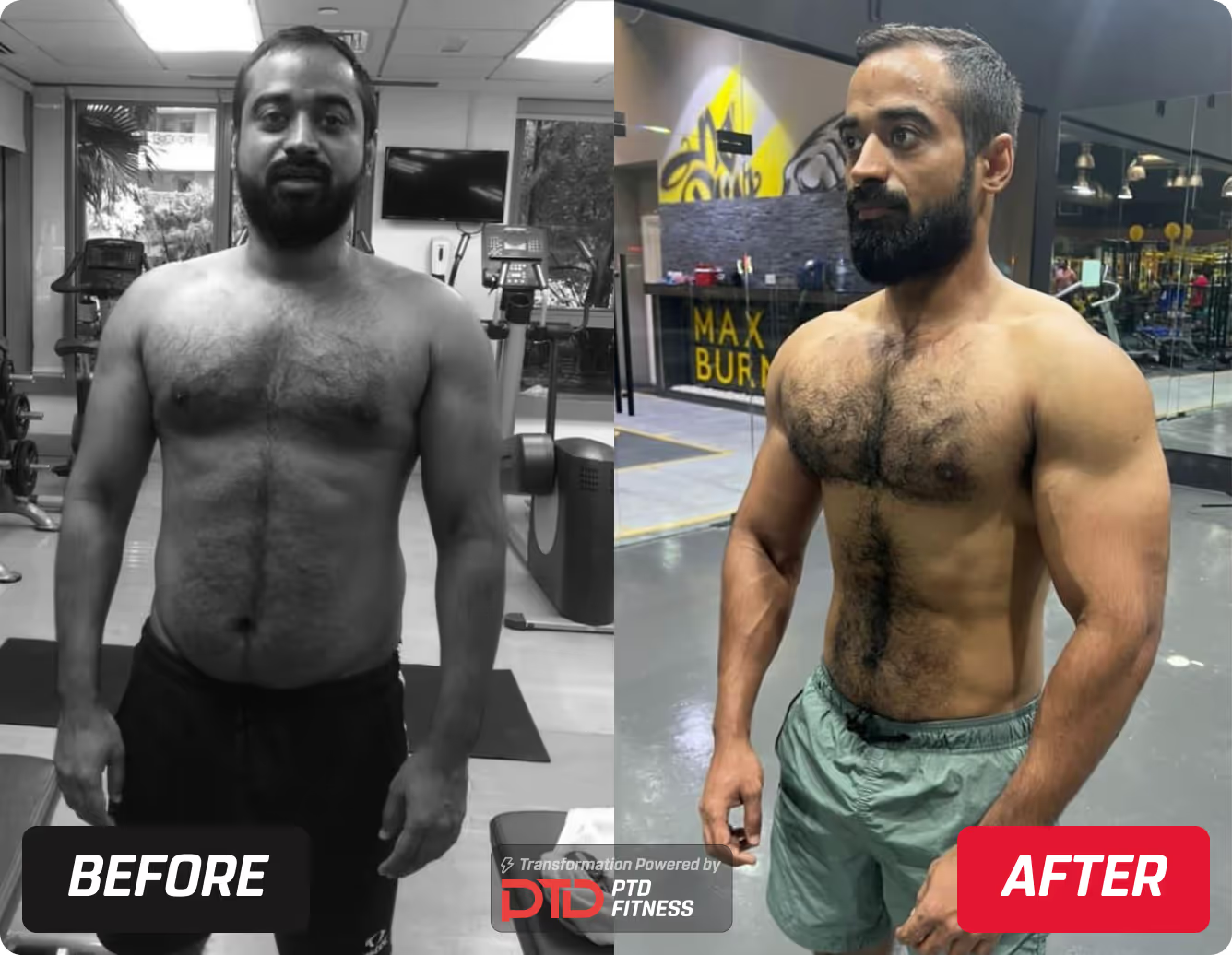
The recomposition setup at PTD: a slight calorie deficit of 250–400 kcal/day, protein at 1.8–2.0 g/kg, resistance training 3–4 times per week, and lean-mass tracking via STYKU 3D body scanning to confirm fat is being lost and muscle preserved. Scale weight alone will not show recomposition accurately — composition tracking is essential.
Building muscle after 40: what changes and what to do about it
After 40, two things change the muscle-building equation:
Sarcopenia. From approximately age 40 onward, untrained adults lose roughly 1% of muscle mass per year — a finding supported across multiple longitudinal studies. By 60, someone who has not resistance-trained may have lost 15–20% of their peak muscle. Resistance training arrests this loss and can reverse it at any age.
Hormonal shifts. Testosterone declines gradually in men from the mid-30s (roughly 1% per year). In women, the perimenopause and menopause transition reduces estrogen — which plays a direct role in muscle quality and bone density. A 2025 meta-analysis (PMC12445185) confirms that resistance training is the most effective intervention for offsetting these changes in postmenopausal women.
Protocol adjustments after 40:
- Longer warm-up: 10–15 minutes of movement prep before lifting protects joints and improves force output.
- Compound-first programming: squats, deadlifts, rows, and presses produce the greatest hormonal response and the most functional strength.
- Recovery priority: muscles take 48–72 hours to recover fully after 40, compared to 48 hours in younger trainees. Programme rest days accordingly.
- Protein at the top of the range: 2.0 g/kg. Older muscle tissue has a slightly blunted response to protein (anabolic resistance), so more total protein improves the signal.
PTD’s Master’s-credentialed coaches specialise in over-40 programming — the goal is not just aesthetics, it is long-term metabolic health and structural independence.
Women and strength training: what the research actually says
The most persistent myth in women’s fitness is that lifting weights produces a “bulky” physique. The reality: women have approximately 10–30× less circulating testosterone than men, making the kind of hypertrophy that produces “bulk” physiologically difficult without anabolic assistance.
What strength training does produce in women:
- A leaner, more defined appearance at the same scale weight (more muscle, less fat)
- Higher resting metabolic rate (muscle burns more calories at rest than fat)
- Improved insulin sensitivity and blood sugar control
- Significantly better bone density — critical for osteoporosis prevention post-menopause
- Greater strength and physical independence in later life
The recommendation from PMC12445185 for postmenopausal women is resistance training at least 2–3 times per week, at moderate-to-high intensity, as the primary intervention for preserving body composition and metabolic health.
For women in Dubai concerned about training privacy, PTD’s at-home model means sessions take place in your home, building gym, or private space — with the option of female coaches. See body transformation for how this is structured over 12 weeks.
Sleep and recovery: the lever most people ignore
Training creates the stimulus for muscle growth. Sleep is when growth actually happens — muscle-protein synthesis is highest during deep sleep, and growth hormone secretion peaks in the first few hours after you fall asleep.
The landmark finding: Nedeltcheva et al., published in the Annals of Internal Medicine (2010), placed dieters on identical calorie deficits with different sleep allocations. The short-sleep group (5.5 hours/night) lost 60% more muscle and 55% less fat than the 8.5-hour group. Same diet, same deficit — sleep was the only variable.
For muscle building specifically, the mechanism is double: poor sleep blunts muscle-protein synthesis and elevates cortisol, which is catabolic (it breaks down muscle tissue to release glucose). Chasing muscle while chronically under-sleeping is working against the biology.
Practical sleep targets for muscle and fat loss:
- Minimum: 7 hours of sleep (below this, performance and recovery suffer measurably)
- Optimal: 8–9 hours for anyone in an active training programme
- Ramadan adjustment: if sleep timing shifts due to suhoor and iftaar schedules, nap in the afternoon to compensate; training intensity should be reduced slightly
For how nutrition interacts with recovery and performance, see the nutrition guide. For the complete 12-week coached system, see body transformation or book your free assessment to start with a STYKU 3D baseline.
Related guides
- How to build muscle after 40 — the evidence-based protocol
- How long does body recomposition take? Honest timelines by profile
- How much protein do you need to build muscle? The research-backed answer
Individual results vary. This guide is for educational purposes and reflects general training and nutrition principles. If you have an underlying health condition, coordinate with your doctor before starting a new exercise or nutrition programme.